
Dark Tourism and the Titanic: How the Legacy of Titanic is not just what it appears to be
Belfast's Titanic - The Unmentionable Turned to the Admirable
‘Dark Tourism’ is a growing industry and Belfast’s most famous ship the RMS Titanic is part of that trend with increasing visitor numbers to the Titanic visitor attraction. But what of those who died in accidents before, during and after the Titanic was built. What of their stories and is their stories any less important than those who perished on that dark April night in 1912? Join Titanic expert Peter Fox and former Harland & Wolff painter Francis Higgins as they explore not only the story of the ship but also the ‘Dark Tourism’ consumer market that has surrounded the story of the ship from its sinking.
There’s no gravestones, blue plaques or memorials around Titanica,To remember all those Yard Men under the sod.
NAVALIA DAMNATIO MEMORIAE
They dug out the Dargan Channel,
Shifted sleech and silt with their bare hands,
Shovelled sand and silt for a shilling,
That added great value to Lord Pirrie’s lands.
‘Thanks very much for your service,
We’re sorry that you must go,
But you’ve burnt yourself out on our island son,
And we’ve no time for any man that’s slow,
’So they doffed their caps and donned their coats
And walked slowly home up the Queen’s Road.
They erected huge steel gantries,
Toiled in candlelight, deep in manys a dark hold,
Built leviathans like Britannic and Titanic,
That filled up the shareholders pockets with gold.
‘Thanks very much for your youth son,
You gave all you could for the Yard,
But now you’re old and tired.
Here’s your cards, get out, you’re fired!’
So he doffed his cap and donned his coat,
And waited silently for the next tram home.
They plated hulls, fabricated weldments, outfitted cabins,
Working in the heat of furnaces, through frozen winters,
Toiling, boiling, night and day,
Launched gigantic supertankers, oil rigs and bulk carriers,
Losing limbs, aging rapidly, dying quickly ever quietly
For the director’s vast pay.
‘Thanks very much for your finger or thumb,
You’ve paid for those great ships with your life’s blood
It’s nothing personal just a fiscal necessity
For you to lose the odd vital limb,
“Be a man now and take your loss mutely,
Squarely but softly, softly on your ever soft chin,”
And he doffed his baseball cap and donned his coat
And loudly, lamely, limping he caught the next bus home.
So now there’s only a few men left of the workers,
The Yard’s a Skeleton, all the good work has moved abroad,
There’s no gravestones, blue plaques or memorials around Titanica,
To remember all those Yard Men under the sod.
Thanks very much for your memories,
You’re that part of the Shipyard’s history
That’s been left out in the cold,
Belfast’s tourists want reaffirming stories,
Not the sad sagas of the men who were once so bold,
They have sold our heritage cheaply lately
And pay for it now with fool’s gold.’
Then they doffed their Donegal tweed caps and donned their coats,
As the tourist bus passed them noisily and forever
as they slowly tramped their long way home.
I wrote this poem a few days after I had stood at the bottom of the old slipways and remembered paint spraying thousands of air ducts and ships fittings for a number of Harland & Wolff ships along with my workmate Jim Forsythe (Jim was known as the Coup and most shipyard workers had such nicknames, mine was ‘Gaddafi as I was a socialist when I was young as most young people are.) It was 2002 and like a moth to a flame I was drawn back to the shipyard that I loved and worked in for almost twenty years. I was along with my wife’s uncle Leonard Calder who also worked in the Shipyard for years and who sadly has since died due to a fatal lung disease that he contracted in the ‘Yard.’ So too perished my wife’s grandfather and another of her uncles (Brian Murray.) Her father (Norman) died young due the years of strain of being a foreman in the ‘Yard’ and rewarded by being made redundant when his working life was over.
Almost every single paint department foreman that I knew had also died before they were 65 years old, so its no great leap of faith to surmise that their untimely deaths was caused by the grinding hard work at Harland & Wolff for 10 to 12 hours a day 6 or 7 days a week. Leonard was watching a small boat full of tourists as it chugged across the water the end of the old slipways. He shouted ‘Fuck off, you don’t belong here, fuck off back to the Giant’s Causeway this is our shipyard! (see author’s photograph) But it wasn’t ‘our’ shipyard of course, the shipyard did briefly sell shares to its workforce but the shares value disappeared like snow off a ditch as did our jobs when it suited the company. We walked up the now deserted Titanic slipway where a hording was being erected around what was to become a new visitor attraction ‘Titanic Belfast©’ and I looked over to the old deserted Harland & Wolff main office block where I had my picture taken for my shipyard pass in 1983. I was burning with anger as I realised that this new ‘Titanic’ attraction was to be built on the exact spot where many men had died building ships for over 100 years to commercialise a ship, the RMS Titanic that sank in 1912 and a ship that Harland & Wolff definitely wanted to forget. To quote the broadcaster Gerry Anderson the ‘Unmentionable (had) turned to the Admirable.’
I sat down later that night a wrote that poem you’ve just heard (Memorai) that was published on my book on the men of Belfast Shipyard on how I felt at this ‘Insult’ by the commodification of a disaster that claimed the lives of over 1500 people but the lives lost building this and other ships were ignored. Still I thought, there might be the story of the totality of lives lost, maimed and families devastated in the Queen’s Island shipyards in this new ‘attraction’ but no alas it was not to be. When I visit the attraction you find that history apparently ended with the burials of Titanic’s dead, its as if they buried the future shipyard accidents and even a murder at the shipyard with the Titanic’s dead too. It’s as if they never existed those men who spent their entire working careers here in this space, this place, some dying, some horribly injured and some fatally injured only to die slow lingering deaths through industrial diseases. But I was one of the lucky ones. I could write a poem about how I felt others would and did turn to drink. That’s thanks to my wife who bet me five pounds that I wouldn’t go to night school whilst working at the ‘Yard.’ My first teacher as an adult was Ivy Green who retaught me how to write as had begun to lose my literacy even how to spell because if ‘you don’t use it you lose it.’ Ivy’s dedication put me on the path to gain a BA (Hons) an MA and I eventually became a teacher so I had the power of words to relate, if not sooth, my feelings of injustice for those so obviously forgotten. That journey led to my writing books, which I still do, but what you are about to hear is my journey of discovery into what is called Thanatourism or ‘dark tourism.’ The story of a man-made disaster that could have and should have been prevented has now been sanitised and Disneyfied to sell tickets in what is now a ‘shared space.’ ‘Shared’ as part of our Peace Process’ ‘Great Reimaging’ project as opposed to the very Protestant space that were once the shipyards of Queen’s Island.
I have described Titanic Belfast as a site of Thanatourism so just to explain my reasoning ‘Dark Tourism’ as defined by Lenon and Foley (John Lennon and Malcom Foley, 2000) required three elements: an event that was publicised through global communication, that event challenged the safe world of modernity (introduces anxiety in case an ‘unsinkable’ ship) and lastly that event can be commodified through sales and marketing. The loss of the Royal Mail Steamer Titanic in April 1912 meets all three requirements. Its loss was arguably the first real global media event (Lennon & Foley) and its preventable loss unnerved a hubristic modern society at a time of ‘over confidence .. (in)…Edwardian society’ (Metto, 2024) Thirdly the Titanic ‘brand’ is sold and still sells worldwide through movies, artefacts and of course tickets to Titanic Visitor Attraction in Belfast which according to the film maker David Cameron is ‘one of the most well-thought-out Titanic museums in the world.’
OK, so to play the ‘devil’s advocate’ the disaster was over 100 years ago, the last survivors have long since passed away so what’s the harm in using the brand to attract tourists to Belfast, which after all was the place where Titanic was built and launched. After all I should be the last person in the world to criticise Dark Tourism and making money from ‘dark’ sites as I was a guide in Auschwitz probably the most famous ‘Dark Tourism’ site in the world. Auschwitz charges around £30 per person for entry and have had over 1.8 million visitors in 2024 (Auschwitz, 2025) that’s just over half a billion pounds each year. It’s a not-for-profit institution but it still has a turnover and pays salaries to its employees. The problem is for those of us who worked at Harland & Wolff in the once ‘biggest shipyard in the world’ (Stoker, 1907) the rose tinted story of Rose and Jack and the ‘Heart of the Ocean’[1] just doesn’t fit our memories. Those memories were something quite, quite different altogether.
When I began my career at Harland & Wolff I was given a pair of boots, a set of overalls, my pass (we called our passes ‘boards’ as they were once made of wood) and two small pamphlets: Health & Safety in the shipyard and the history of Harland & Wolff. Both were useless in surviving in a busy shipyard because in the 1980s. Accidents were almost daily occurrences and we lost on average one man per ship to a fall, head injury, machine impact or paint fume explosion. That’s not even counting those dying of work-related lung diseases. Acceptance of accidental death was the norm and outrage at the loss of life was limited to the day of the wake of the deceased usually held in a ‘shebeen.[2]’ Next day you got back to work, albeit with a hangover but that was the culture engendered by us and we accepted it as a necessary evil to earn a wage in a Thatcherite Belfast (Cambridge, 2024) of deliberate and lasting high unemployment. We didn’t expect memorials to our ‘fallen’ of industrial accidents nor witness visitor ‘pilgrimages’ in Seaton’s ‘thanatoptic tradition’ (Simone-Charteris, 2026) to the exact locations where they died but I can still point out those precise accident death locations even today. It’s like they are place markers on your very soul. Thanatourism was not even conceptualised let alone recognised in the 1980s, so we could never have imagined that tourists would ever want to come to Queen’s Island for any reason. Death on the ‘Island’ was final and memorials were for the ‘forgotten’ heroes of world wars not shipyard accidents. No we tried to avoid the locations where men fell to their deaths (if possible) and called them a place of ‘bad luck.’ The same ‘bad luck’ for those who contracted terminal lung diseases and exchanged years of their lives for a pittance of compensation . Then came the terminal decline in Belfast shipbuilding and in its wake came the ‘Great Reimaging’ (Hocking, 2015) of the docks areas of London and Glasgow and of course Belfast.
The decline of Harland & Wolff shipyard neatly coincided with the rise of ‘peacebuilding’ in the run up to and post ‘Good Friday Agreement’ of 1998. The overwhelmingly Protestant and ‘Loyalist’ Queen’s Island (named after Queen Victoria) was to become a ‘shared space’ where multinational corporations could invest in apartments, shops, bars and perhaps even a visitor attraction all on land cleared of all but the most innate shipyard buildings and equipment. Cleared too was the dark history of the shipyards. After all it would not be a good investment to remember the dead of the shipyard or the discrimination against Catholics that took place there in the location you wanted to make a killing return on your investment. As for Titanic and Harland & Wolff the company had done everything in its once great power to deliberately forget the Titanic. They had asked the BBC not to broadcast anything on Belfast’s shipyard links to the ship as early as 1932 and again in 1936. (Hill, 2014) The soon to be Prime Minister of Northern Ireland Sir Basil Brooke also intervened in 1947 (ibid) and Harland & Wolff itself refused to allow filmmaker William McQuitty (a Belfast man who had witnessed the launch of the Titanic) permission to film on their premises in the 1950s for the 1958 seminal movie on the Titanic A Night to Remember(ibid.) This is where ‘I come in’ to quote my grandmother when she took me to see the movie when I was around seven years old. She took me to a matinee presentation because her favourite grandson Billy Higgins had just came home on leave from the Royal Navy and gave her a book that he got as a ‘freebee’ whilst working as an unpaid extra on a movie called ‘A Night to Remember.’ Billy was paid to dress up as an Edwardian women passenger and jump off the film set deck of the Titanic. I still have that book and that sparked my interest in Titanic that has lasted a lifetime.
But you didn’t even mention the word Titanic when you worked at Harland & Wolff. It really was a ‘dead’ subject if you’ll forgive me the pun. It was if it never existed and the slipways where the ‘most famous ship in the world’ was actually built was a car park or used to store gas cylinders. In the 1980s I was asked to take a tall American to the Titanic slipway as he was interested in a ship called the Titanic. That American was Dr Bob Ballard who unknown to anyone at the time had been tasked by the CIA to find two American Navy submarines (USS Thresher and USS Scorpion) and his CIA cover story for looking for these two sunken submarines was to find the Titanic. Ballard did have a lifelong interest in the Titanic so this was the perfect cover and it worked. Ballard had been ordered to find the Submarine wrecks (they are still regarded as ‘top secret’ in the USA) and if there was any time remaining on his mission he could go look for the wreck of the Titanic. Ballard found both Sub wrecks and had just twelve days left on his expedition. He found the Titanic on the last day and the Titanic legend was reborn. I say reborn as there had been speculation that the Titanic was almost intact due to the icy cold waters she had sank in (see the movie ‘Raise the Titanic’ for what fantasy can do for you.) Alas Ballard’s discovery was that the ship had broken in half as her hull could not sustain the strain of the collision and her stern had imploded with her bow burying itself deep into the sediment in 12,500 feet of salt water. Unfortunately the ship had sunk in international waters with no legal protection so from that moment on she was fair game to any souvenir hunters who could reach her and they have been plundering the wreck ever since.
I do have an actual rivet from the Titanic gifted to me by an old shipyard shipwright, ‘Comber’ Bob. Bob’s father had worked on the ship and the rivet was a ‘trophy’ as it was the first rivet he had driven home as an apprentice and it had been ‘struck out’ as a keepsake. ‘Comber’ Bob had befriended me when we both worked on the Royal Fleet Auxiliary Ship Argus when my mother died suddenly in 1985. I went to pieces but I still had to pay the mortgage and put food on the table so I had to go to work but did nothing all day except sit on the wooden staging hidden from view whilst my workmates did my work for me. The shipyard was that kind of place. It was tough but kind. Comber Bob believed I would snap out of it if I had something to occupy my mind so he showed me how to carve ships in bottles from scrap wood. I began with sailing ships but when I showed them to people they all knew how the ship-in-a-bottle trick worked using string. So I worked out a way to bottle ships that looked impossible using the ship I had known from the movie ‘A Night to Remember’ the RMS Titanic. I made hundreds of Titanic’s in bottles and sold them in Belfast pubs for the price of a drink especially the Globe Tavern (now Henry’s Pub) and the Lifeboat Bar (now the ‘Boat’ apartments.) When I brought them into the shipyard there was always a ‘smart-ass who insisted that the colour I had used for the Titanic’s funnels was wrong. I used a cream colour as I had seen a rare colour picture of the White Star ships and they had cream coloured funnels. Others argued the funnel colours were red or even blue.
It was a rainy day around 1988 when the old argument over the colour of the funnels broke out again in a wooden hut where we took our lunches at the ‘Deep Water’ fitting out jetty. That day however an old ‘slinger’ called Tom (his job was to guide the crane drivers to load supplies onto our ships) quietly said the Titanic’s funnels were painted cream and black. Tom never said anything in our sometimes wild lunchtime arguments so his quiet announcement surprised us all. I was first to speak as the self-appointed ‘authority’ on the Titanic. “And how the hell would you know Tom?” I exclaimed. “Its simple” he replied “I have the original plans.” Everyone fell about laughing at this ludicrous statement as it was well known the original plans had been lost in the Nazi blitz of Belfast in 1941. ‘Bullshit’ someone said, “Prove it” I said so Tom then challenged me to a £15 bet. If he brought the plans to my house that night and proved he had the originals he would win the bet. To be honest I had forgotten about it by the evening but after dinner Tom rang our doorbell and rolled out the plans on our floor. They were long, very long, drawn in pencil with some ink drawing over some of the pencil lines and at the bottom corner of the plans was the unmistakeable signature of Thomas Andrews the chief designer of Titanic who went down with the ship. I lost the bet but it was worth the £15 just to hold those plans in my hand. What happened to them? Well that’s for another day and another podcast but we did try to form a Titanic society at Harland & Wolff but the shipyard would not even give us a room to meet on the premises and we had no money to hire our own so that was it. The end of the line.
Harland & Wolff’s non-interest in the Titanic is clearly demonstrated in the official history book of the shipyard distributed to employees from the late 1980s onwards. Titanic gets one sentence, just one in the whole long history of the yard. About three of us went down to a meeting of the new ‘Titanic’ society at Bangor Town Hall around that time but it clearly was more of a first class group and not second, third or even crew class and we were not made very welcome so we quietly left. There is a Belfast Titanic Society today who’s mantra is ‘She was alright when she left Belfast’ the inference being that the ship was ‘sound’ and it was the fault of seamanship that seen her hit and iceberg, rip her side out and sink. But that’s simply not true. The disaster could have and should been prevented by higher watertight bulkheads and more lifeboats in case of a disaster but Harland & Wolff and the White Star Line (the owners of the ship) had agreed otherwise. True the ship did suffer a series of unfortunate unplanned calamities yet still met the requirements of maritime law but tell that to the 1500 passengers and crew who died in those horrible circumstances in the middle of the Atlantic ocean.
So was my wife’s uncle Leonard justified for shouting ‘Fuck off’ to the tourists as the Titanic visitor building was being raised behind him? Well that sentiment did work both ways. Apart from a few bits of community relations events the men who built the more than 1700 other Harland & Wolff ships have been quietly dropped out of history. After all how this going to be marketed as a shared space when Catholics had being driven out of the shipyards just a few weeks after the Titanic was launched, then again in the 1920s and loyalist marches were still taking place inside Harland & Wolff and around Short Brothers aircraft factories right up until the early 1990s. Shared space? Yes, it is now but I feel that this sharing stops when it comes to the realities working at Queen’s Island by some and that’s why its not shared with us. You see we just don’t fit in, we are not Jack and definitely not Rose.
In my book ‘Tall Tales and Short Stories the Men of Belfast Shipyard’ I had the chance to tell at least some of the controversial history of Queen’s Island from discrimination to preventable ‘accidental’ deaths including the murder of a catholic in June 1994. The deaths of Titanic crew and passengers now outweigh those of the men of Harland & Wolff in the court of Thanatourism history. Paulene Hadaway writes on Dark History ‘Real human experience with all its contradictions and complexities cannot be permitted to speak on its own account’ (Hadaway, 2014) The Titanic brand has been selling merchandise almost from the moment she slipped under the waves. From newspapers to movies to Titanic shaped ice cube trays and comedy tee shirts millions of dollars and pounds are earned from Titanic’s story each year. Money then triumphs over morality and it still does. You’ll be listening to this podcast on Spotify or reading the transcript printed out from a computer so I don’t pretend that I too profit from that tragic night in 1912, but at least I’m honest about it.
This podcast is about Dark Tourism using the Titanic’s sinking as an example but there are lots of other dark tourism sites too including cemeteries and graveyards where in Belfast in 2026 you can book a ‘pub-crawl’ tour of an old graveyard that ends in a bar. That’s a step too far for me and I teach tour guides that the dead cannot object to their very personal grave markers being used without their relatives or families permission. Remember we are talking about dead human beings that once laughed and loved and felt the sun on their faces just like us and they deserve to be treated with due respect, dead or alive. There was a time that the churches in Belfast would have perhaps intervened, but the churches are closing down now and so is their power and in this instance that’s a shame and the dead needs protected and graveyard tours are fine if they are respectable and circumspect but not in every case.
I’ve no doubt that by the 200th anniversary of the loss of the Titanic in 2112 it will still be making money because tragedy sells and that’s at the heart of Dark Tourism. It’s our fascination with death that is perhaps related to our own mortality that can be packaged as a commodity and sold on the marketplace of life. Young men who went on the Grand Tour of Europe during the Enlightenment seen no issue of hearing about the slaughter of the Colosseum by day then going there at night to select a ‘lady of the night’ to lose their virginity. The Les Tricoteuses women of that same Enlightenment period knit whilst heads publicly rolled from the guillotine so that’s perhaps the summit or more aptly described as the depth of Dark Tourism. One of the most popular tours in Belfast at the moment is the ‘Troubles’ tours where paying punters learn of atrocities and bloody murders that occurred a few years ago and still within living memory and I fact I deliver some of those tours. So I’m guilty too, but I voluntarily adhere to a code of conduct that ensures there is no death voyeurism, no grisly details of some of the heinous crimes that happened here in Ireland. Others don’t and that’s their responsibility and conscience not mine. So I started this podcast with my poem and I’m going to finish the podcast with a verse carved into a gravestone in the Shankill Graveyard which was my families burial ground for around 150 years until it closed in the 1950’s. It’s my favourite inscription because it points out the dark fact that someday I too will be part of history and time is indeed short. So make the best of it while you’re here as you only have so many summers until you’re gone and remember that where you are walking now is where your descendants will walk someday when you are long gone so tread softly and honour the memory of all tragic deaths and not just the ones that Walt Disney wants you to remember. As for the ‘Dark Tourism’ of Titanic? As I write this paper on the 13th April the anniversary of Titanic’s collision and sinking is tomorrow and the next day so what’s wrong with remembering those who perished on the ship, or who built her or were left penniless or orphaned by her loss. Nothings wrong with that but remember too the unknown shipyard workers who gave their lives to make the shipyard’s great and whose memory now are just an echo in space and time, so……
‘Stop your foot and cast an eye,
Where you are now so once was I,
Where I am now so you will be,
Prepare for death and follow me’
[1] (https://titanic.fandom.com/wiki/Heart_of_the_Ocean, 2025)o
[2] https://theirishshebeen.org/
They Once Walked this Earth too
Peter Fox recounts the stories of those who built, sailed on and went down with the Titanic in this expert researched podcast. Peter is currently finishing a new book on the Titanic that includes never before seen material and pictures that recount the tragic yet totally preventable loss of the biggest ship in the world in 1911/12. Peter has researched the subject for many years as was a guide at the Titanic Visitor Building in Belfast.
Click on this box to listen to the full podcast and interview
The Picture is Leonard Calder a former shipyard man shouting at casual tourists to ‘fu_k-off’ from the old slipways where the Titanic and Olympic ships were launched from. Leonard and other shipyard men’s sometimes tragic stories that have been quietly dropped by the Belfast tourism industry as they don’t fit in with ‘Rose and Jack’s Titanic story.
Click on this box to listen to the full podcast and interview
Titanic is now a worlwide brand. its name sells tickets, tee shirts even ice cubes and today the Titanic is a major attraction to thousands of visitors each year to Belfast. Yet for almost one hundred years it was truly a ‘dead’ subject in the place where it was built Harland & Wolff. This academically researched podcast delves into that unspoken history with men who are determined to reveal the story of the ship, who built her and died on her. They all once felt the sun on their faces, this podcast shines that light on their stories once again.
Click on this box to listen to the full podcast and interview
Explore the Legacy of Titanic on an expert led walking tour of 'Titanic Town' with Titanic author Peter Fox
Peter was an expert guide at Titanic Belfast for a number of years taking famous visitors to the building on guided tours. Peter now brings his vast knowledge of Titanic’s story from the passengers and crew who sailed on the doomed ship to those who built the most famous ship in the world.
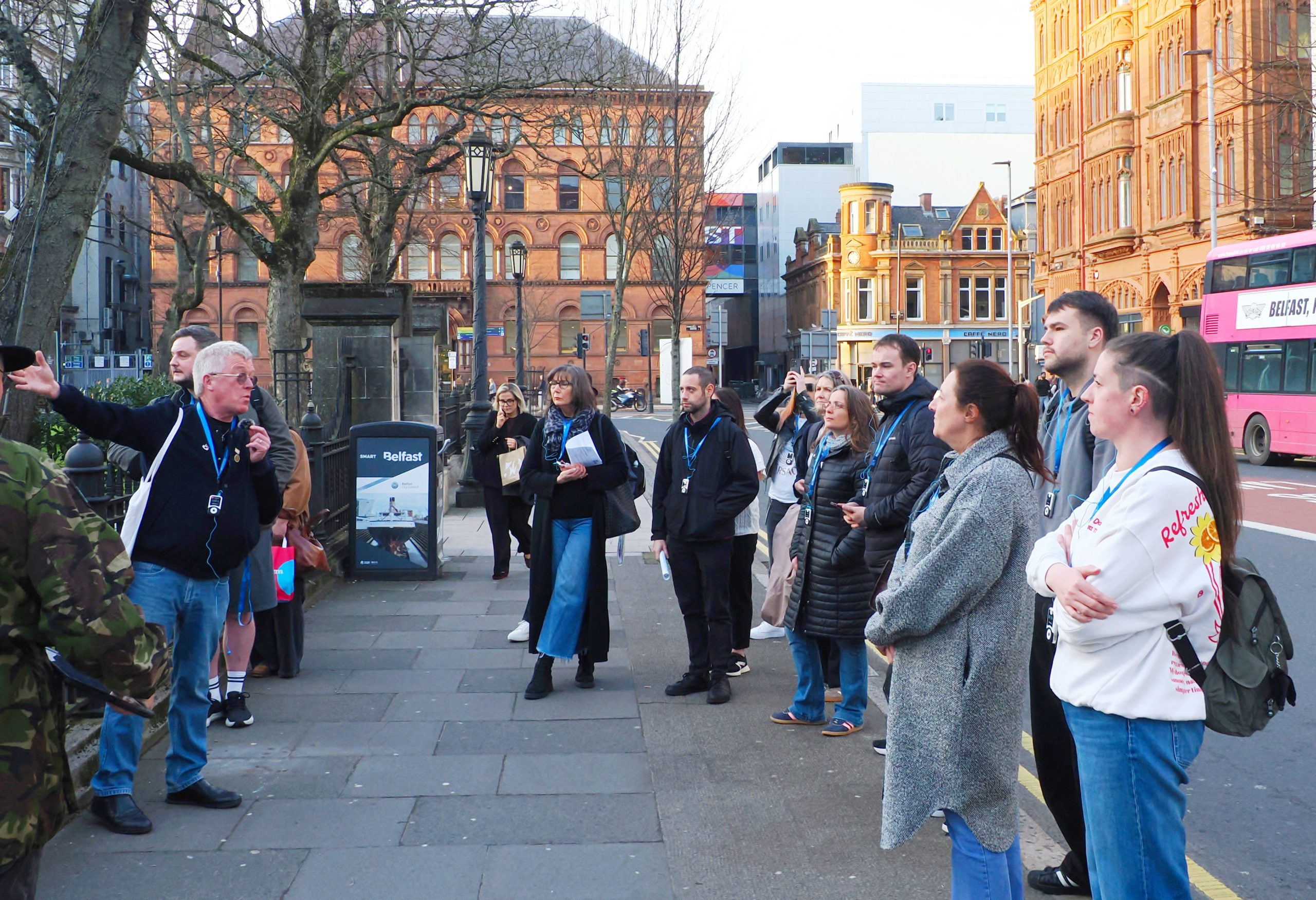
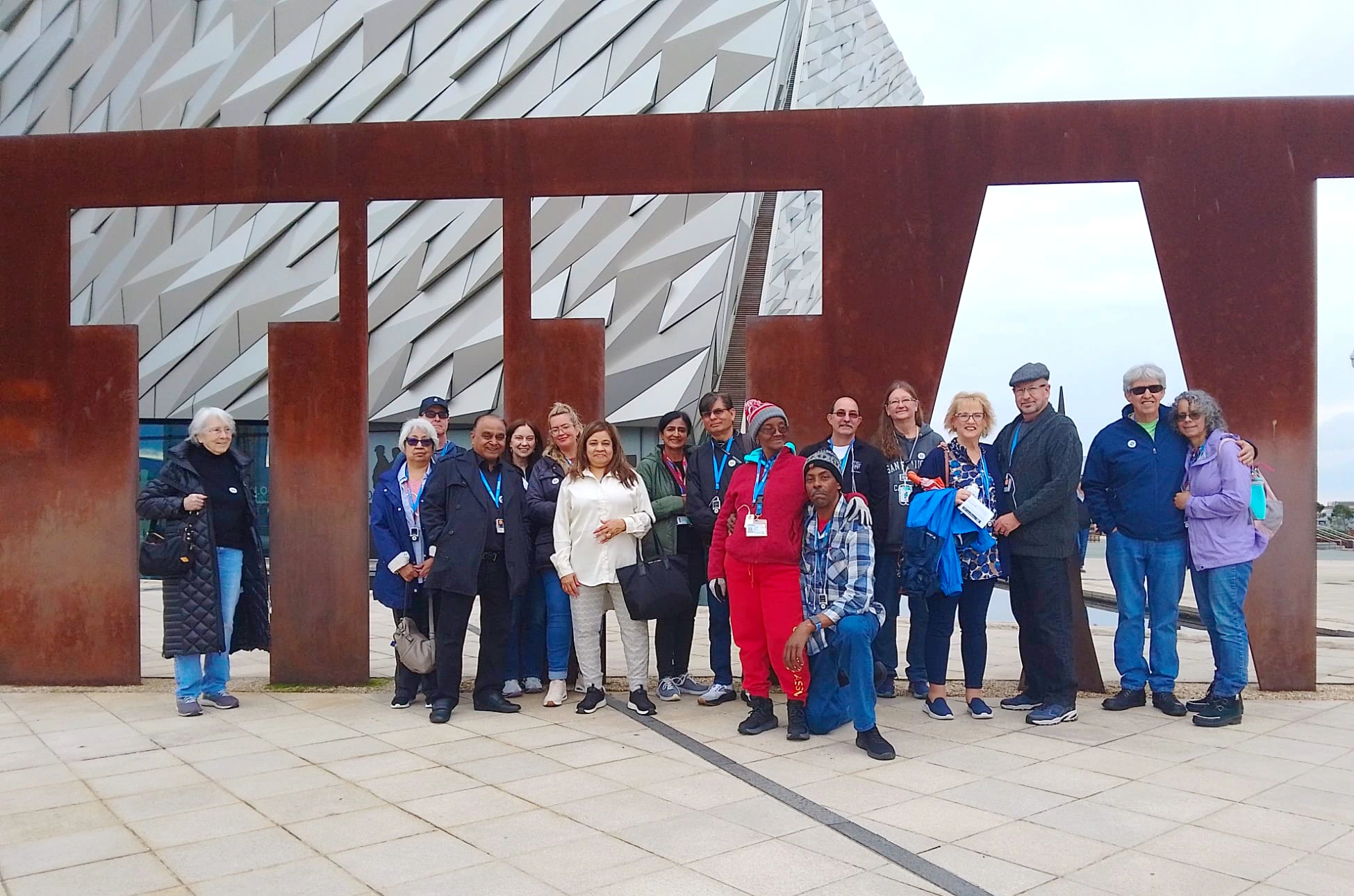
Tourists at Titanic Belfast
Tourists at Titanic Belfast

BelfastLad gets arrested by the Whole in the Wall Gang Uncle Billy and Cal in the Titanic Offices Hotel
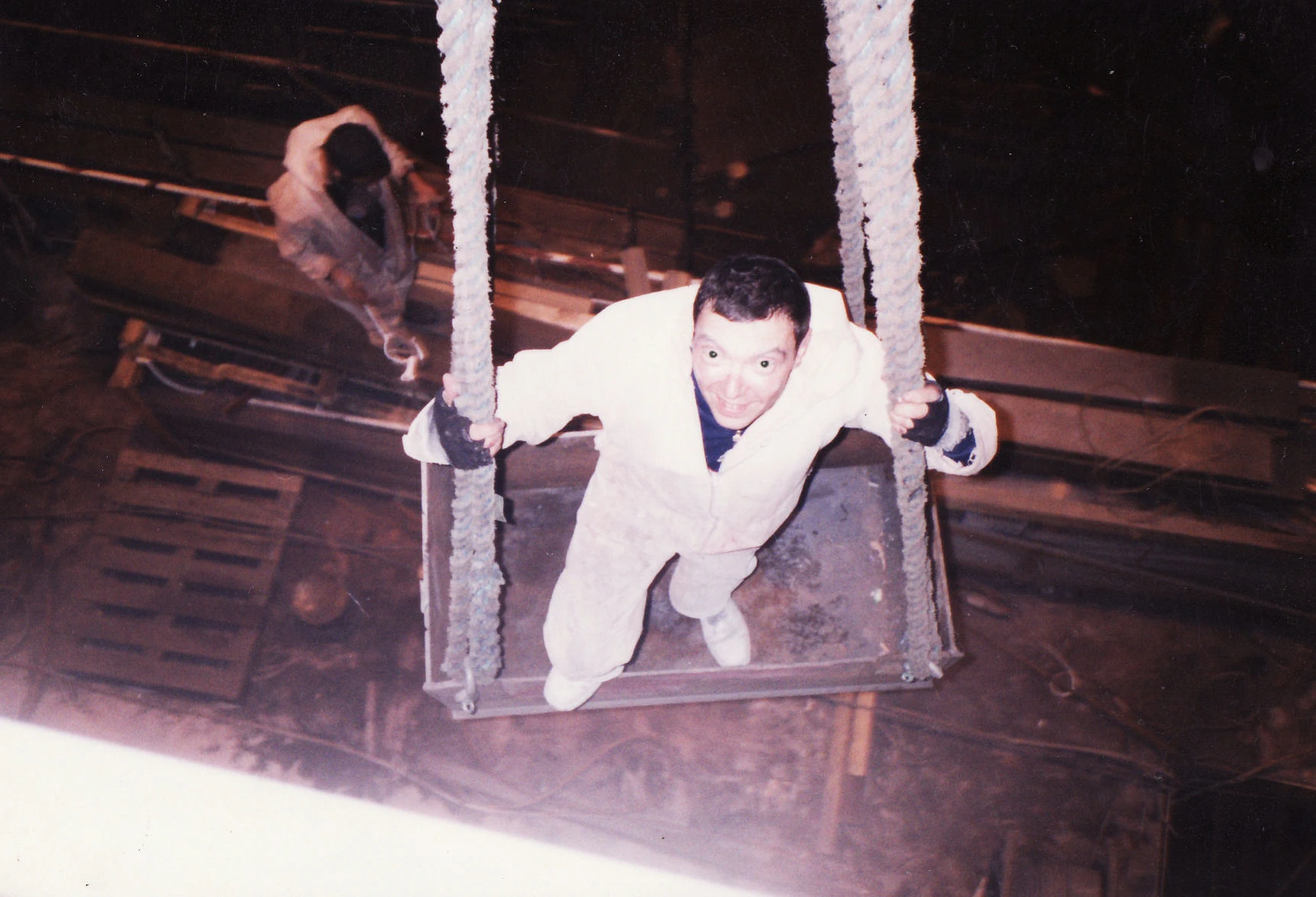
Francis Higgins spray painting the side of the Bulk Carrier Erradale in the mid 1990s
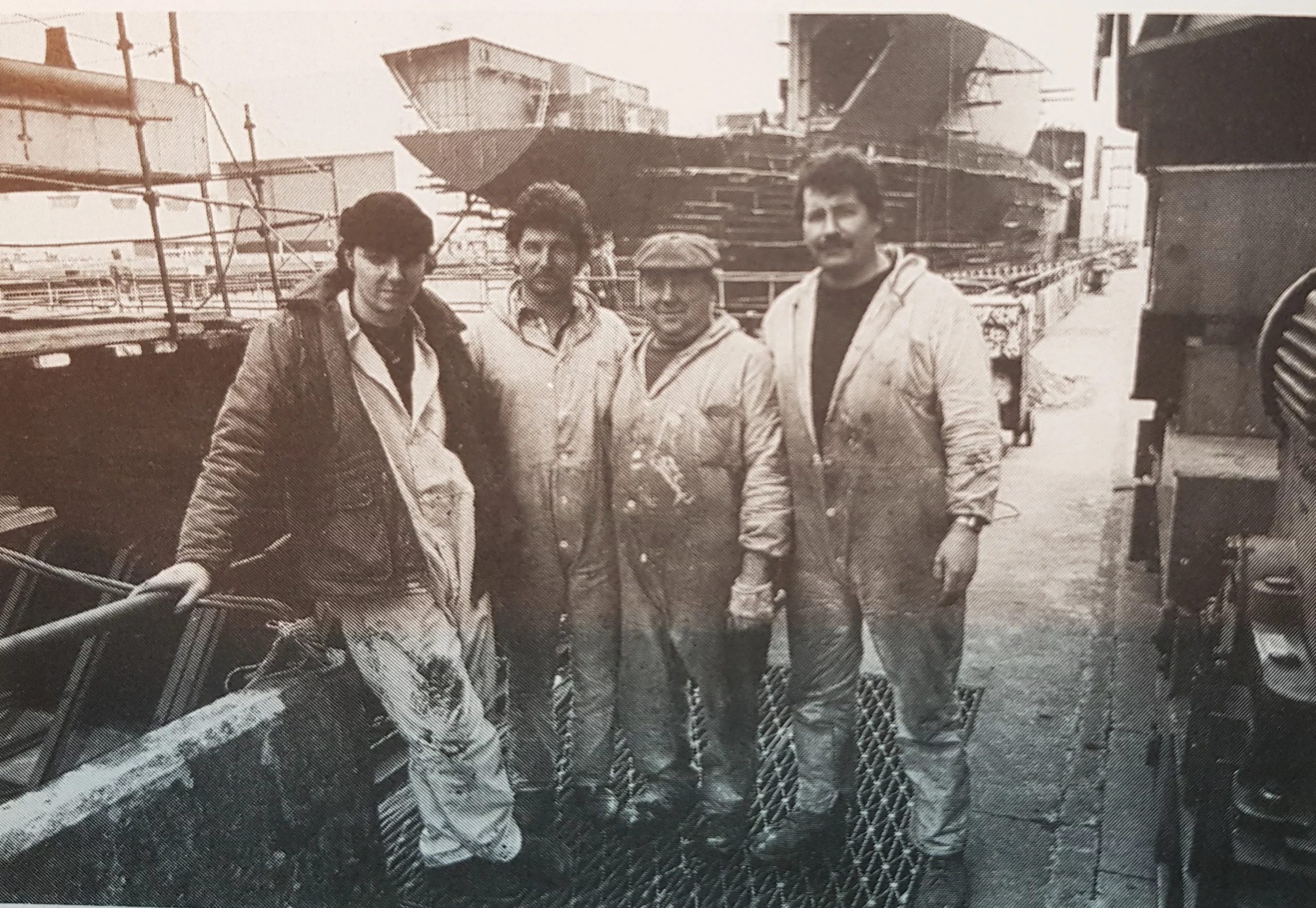
Francis Higgins, Sammy Jameson, John Dempsy and Big Neil’er at the RFA Argus 1996
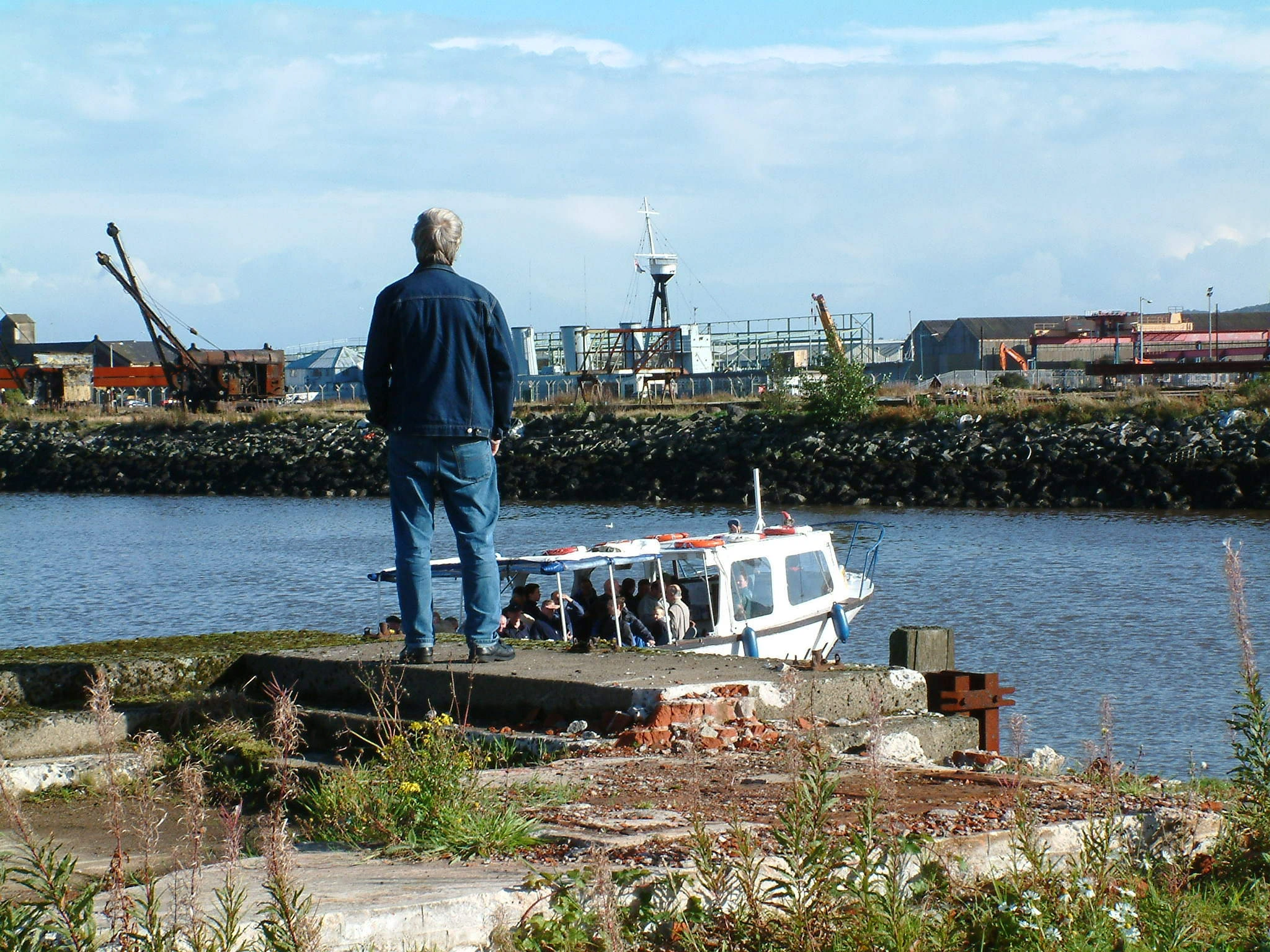
Leonard Calder shouting at the tourists at the end of the Titanic Slipways before they became ‘Titanicised’
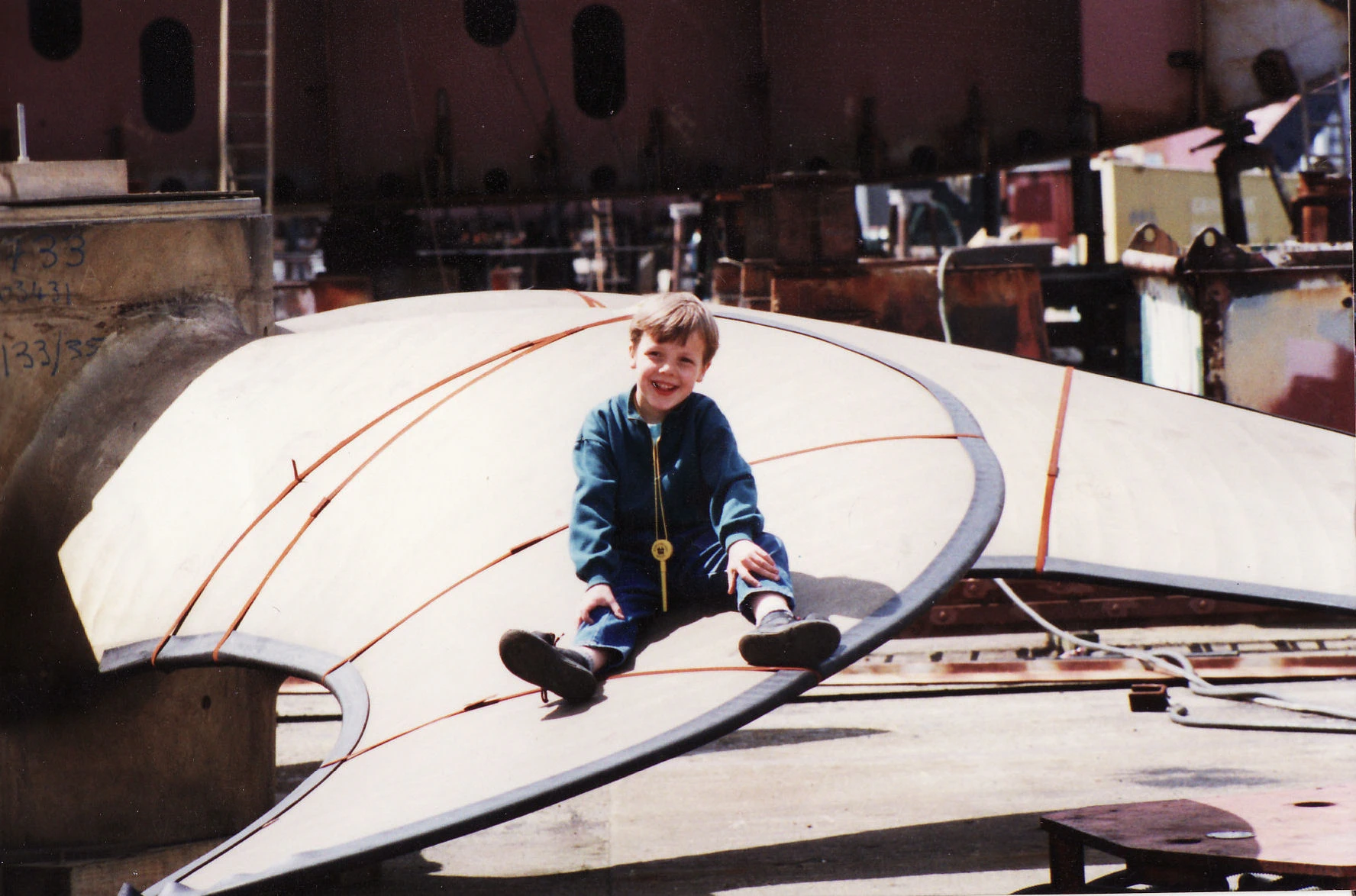
Francis Higgins (Jnr) sitting on the propeller of an oil tanker at Harland & Wolff
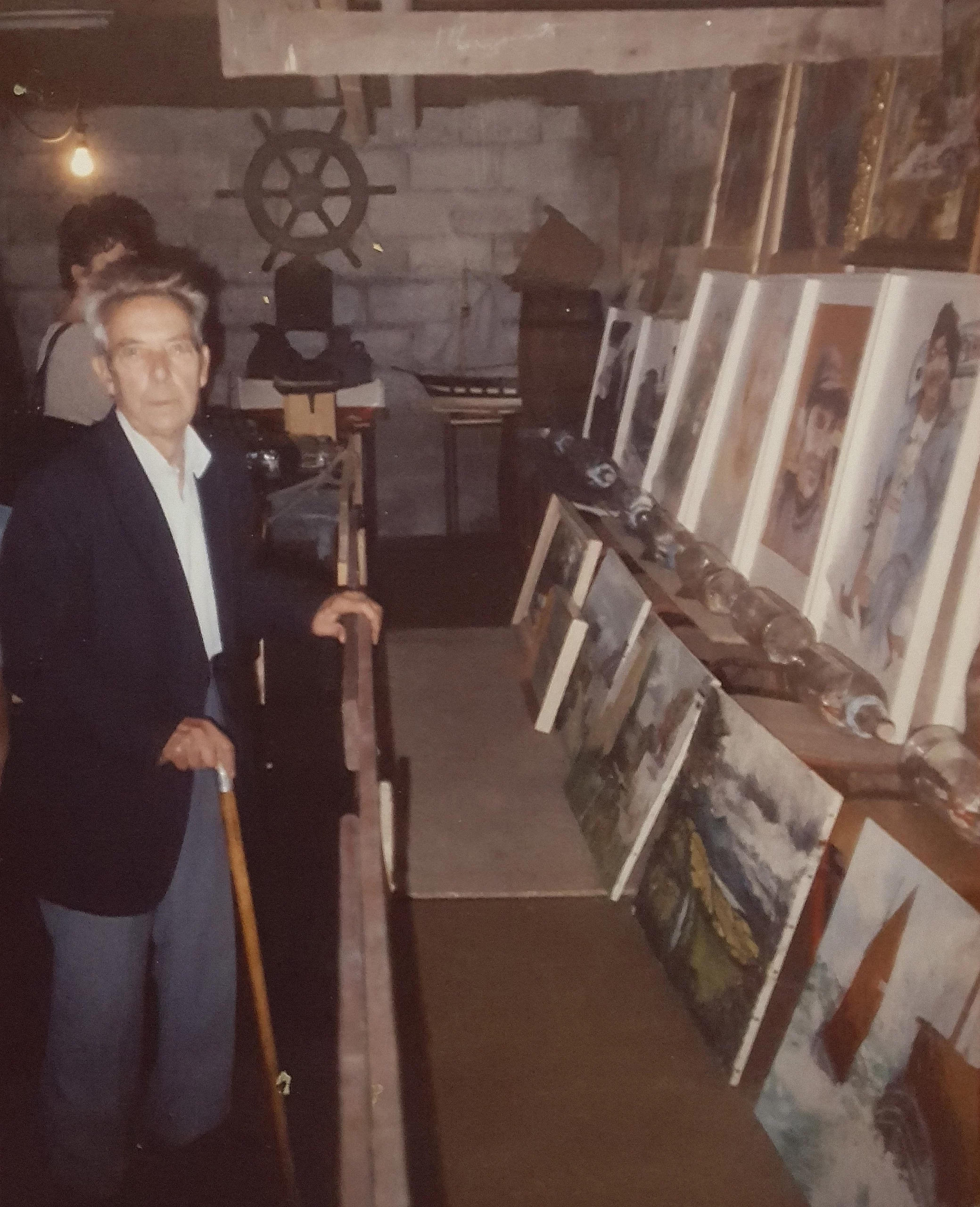
Francis Higgins (Snr) at an exibition of Francis Higgins (Jnr) Ships in Bottles and Willie Muhall’s paintings at Ardglass 1990s
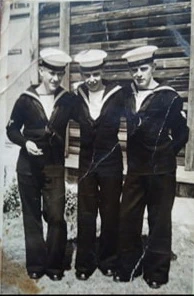
Billy Higgins RN at Portsmouth. Billy was an unpaid extra on the Titanic movie ‘A Night to Remember.)
